
English| EUR
Suggested for you
More currencies
Choose a language
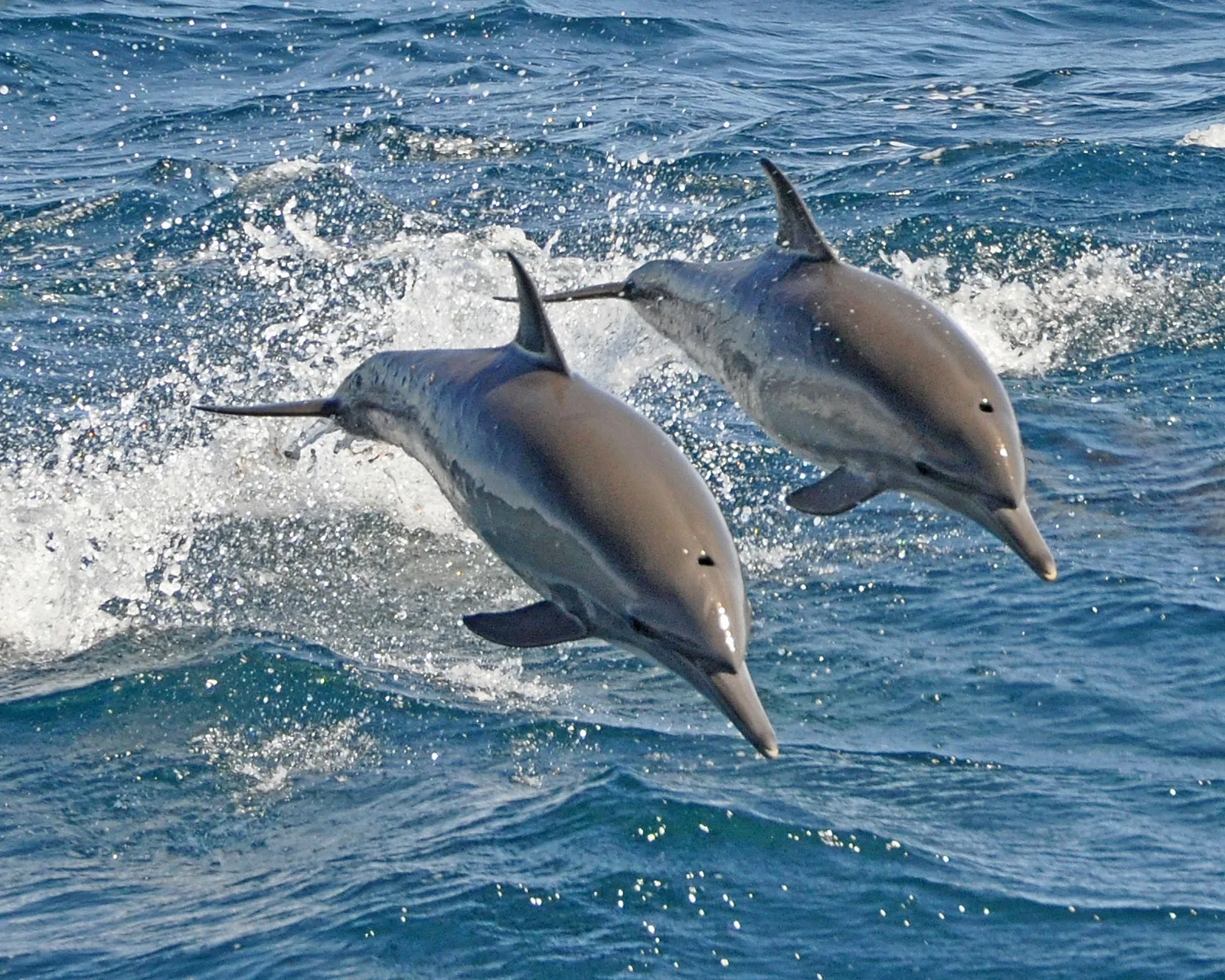
Spain prohibits direct swimming or physical interaction with wild dolphins under national marine protection law. Visitors seeking dolphin encounters in Estepona and along the Costa del Sol can observe these protected cetaceans through licensed boat excursions that maintain legally mandated distances from marine mammals.
Quick answer
You cannot legally swim with wild dolphins in Spain. National environmental regulations classify dolphins as protected species under the Spanish Coastal Law and EU Habitats Directive, prohibiting deliberate pursuit, harassment, or close-approach swimming. Estepona's marina offers responsible boat-based observation as the sole legal alternative, allowing sightings of common dolphins, bottlenose dolphins, and striped dolphins from vessels that comply with minimum-distance protocols.
The Mediterranean coast between Estepona and Gibraltar hosts one of Spain's most reliable cetacean corridors, with resident pods of bottlenose dolphins and seasonal migrations of striped dolphins tracked year-round by marine biologists. Yet the question of where can you swim with dolphins in Spain carries a straightforward regulatory answer: nowhere legally within Spanish territorial waters. Spain's Coastal Law and the transposed EU Habitats Directive classify all cetacean species as strictly protected fauna. The legislation explicitly forbids intentional disturbance, pursuit, or physical contact with marine mammals, including dolphins, in both territorial seas and internal waters. Violations carry administrative fines starting at several thousand euros for individuals and substantially higher penalties for commercial operators. The prohibition stems from documented behavioral research showing that human swimming attempts disrupt dolphin foraging, resting patterns, and calf-rearing cycles, particularly in high-traffic coastal zones. Estepona's position along the Alboran Sea migration route means bottlenose dolphins, common dolphins, and occasional pilot whales pass within visual range of the marina throughout the year. Licensed boat operators departing from Puerto Deportivo de Estepona follow Royal Decree guidelines that mandate minimum approach distances of thirty meters for vessels and one hundred meters when calves are present. Observation excursions typically cruise along the shallow continental shelf where dolphins hunt sardine and anchovy schools, with sighting success rates highest during morning hours when sea conditions remain calm and cetacean surface activity peaks. The operational distinction matters: responsible dolphin-watching in Spain means passive observation from a stable platform at regulated distances, not in-water encounters. Commercial swim-with-dolphin programs exist in other Mediterranean nations with less stringent wildlife statutes, but no legal equivalent operates within Spanish jurisdiction. Estepona's approach prioritizes species welfare while maintaining public access to one of Europe's most biodiverse marine mammal habitats, where sightings occur on approximately seventy percent of dedicated wildlife excursions during optimal seasons.
“Spain's territorial waters prohibit deliberate dolphin pursuit or physical contact under national and EU marine protection statutes.”
Visitors often inquire about swimming with dolphins in Estepona, though regulations mandate that interaction remains limited to observational boat tours. Swimming with wild dolphins is not a legal or available activity in this region.
| Swimming with Dolphins Boat Observation | Prohibited Practice Legal Standard | |
|---|---|---|
| Activity Type | Prohibited interaction | Wildlife observation |
| Interaction Level | Direct physical contact | Non-invasive observation |
| Legal Status | Illegal in Spanish waters | Permitted under regulation |
| Wildlife Impact | High disturbance potential | Low impact via distance monitoring |
| Primary Goal | Recreational swimming | Educational wildlife encounter |
Verdict: Choose boat observation as it is the only legal, ethical, and available method for experiencing dolphins in their natural habitat in Estepona.
The best arrival window for wildlife spotting in Estepona is 09:00–17:00, as this period provides the most consistent sea conditions and visibility for boat excursions. Please note that while visitors frequently inquire about swimming with dolphins, regulations in Spain restrict interaction to boat-based observation to ensure the safety and welfare of the animals.
Mild 18°C–22°C; calm waters
Ideal for sightings as migratory patterns shift. High activity levels are often recorded.
Warm 25°C–30°C; bright sunlight
Sea conditions are generally stable, though boat traffic is at its peak.
Mild 20°C–24°C; clear visibility
Water remains warm with fewer vessels on the water, improving spotting conditions.
—
Optimal timing for quieter boat tours and calm sea states.
Verdict: The optimal period for dolphin observation is during weekday mornings in April or October, arriving within the 09:00–17:00 window.
Access to the Puerto Deportivo de Estepona is free of charge, as it is a public marina. Costs for dolphin excursions are determined by private commercial boat operators rather than a fixed entrance fee.
Verdict: Visitors pay 0 EUR to enter the marina, while boat tour costs fluctuate based on the specific private excursion provider and vessel type selected.
Dolphin observation excursions depart from the Puerto Deportivo de Estepona, located along the western end of the Costa del Sol. The marina is easily accessible via the A-7 coastal road, which connects directly to the town center.
A-7 highway, exit 155 to Puerto Deportivo
Avanza L-77 or L-79 to Estepona Port
Direct service to Av. Luis Braille, 6
For the best access to boarding areas, arrive within the 09:00–17:00 window to ensure optimal daylight and sea conditions. Public parking is available directly at Puerto Deportivo de Estepona, Av. Luis Braille, 6, 29680 Estepona, Málaga, Spain.
The marina area is open daily to provide access to dolphin observation points. Please note that direct swimming with dolphins is not permitted in these waters.
Everything you need to know about where can you swim with dolphins in spain
In Estepona, there are no authorized programs for swimming with dolphins in the wild. Local regulations and environmental protection laws prioritize the conservation of marine species, prohibiting direct contact or swimming activities with these animals.
Many visitors often search for where can you swim with dolphins in Spain, but legal options for interacting with wild cetaceans in the water do not exist. All authorized maritime activities are limited to non-intrusive observation from a distance.
While many people inquire where can you swim with dolphins in Spain, boat observation is the only ethical and legal method available. Unlike swimming, which disturbs natural behaviors, boat tours allow you to see dolphins in their natural habitat without causing stress.
If you are researching where can you swim with dolphins in Spain, you will find that responsible boat excursions are the standard for wildlife viewing. These tours provide educational commentary and professional spotting to ensure a respectful encounter.
You do not need to pay an entrance fee to access the marina area, as it is a public space. Official private commercial excursions are the only way to venture out into the sea for wildlife spotting.
Each commercial boat operator sets its own safety policies regarding age and accessibility. It is recommended to check the specific requirements of your chosen excursion provider before arriving at the harbor.